
Biochem Pathways You Actually Need for NBCE Part I
Open any biochemistry textbook and you'll find dozens of pathways, hundreds of intermediates, and enzyme names that all seem to end in "-ase." No wonder Chemistry is the Part I domain students dread most.
Here's what most students miss: board questions rarely ask you to draw a pathway step by step. They ask about the control points: which enzyme limits the pathway, where in the cell it happens, which vitamin it needs, and what goes wrong when it breaks.
Learn those four things for a short list of pathways, and Chemistry goes from your weakest domain to a reliable source of points. That's what this guide covers.
New to Part I prep? Start with our 10-week NBCE Part I study plan.
The Big Picture: Everything Runs Through Acetyl-CoA
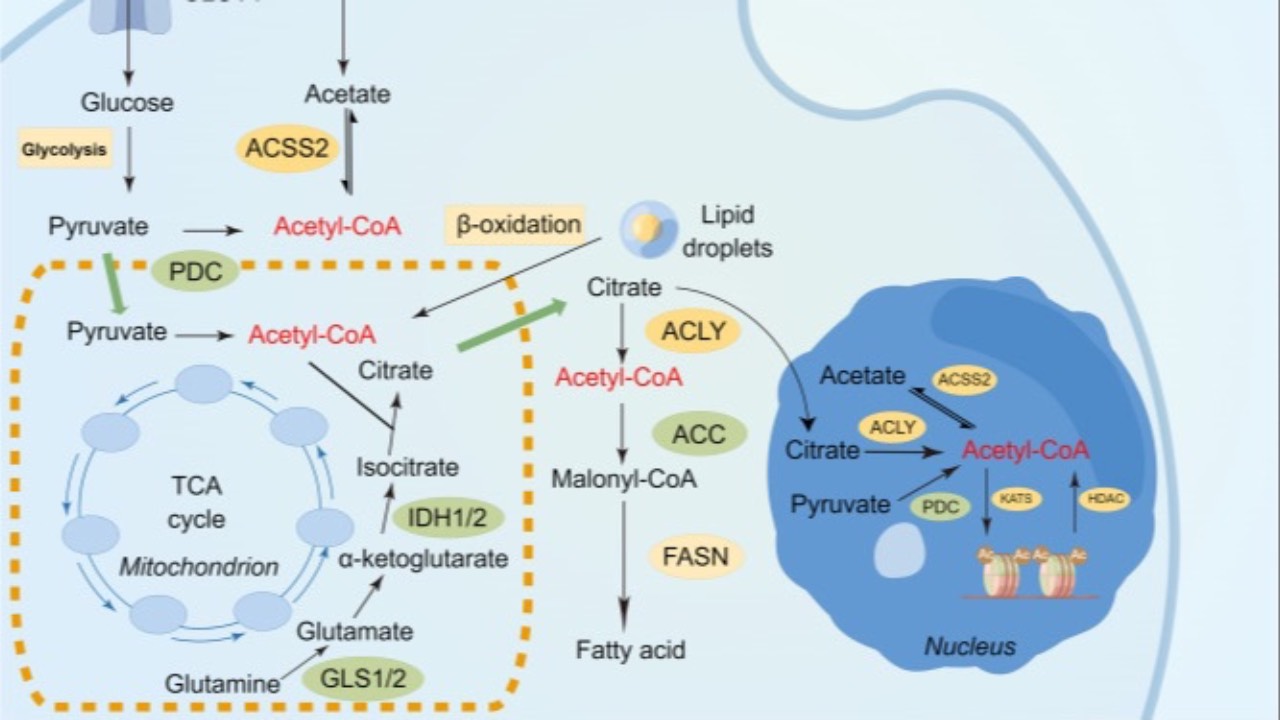
Before memorizing enzymes, get the map in your head. Carbohydrates and fats both get broken down into acetyl-CoA. From there, the cell either burns it for energy or, in the liver, builds it into something else.
energy metabolism · acetyl-CoA as the hub
When a question describes a metabolic state, place it on this map. A fasting or diabetic patient breaks down fat, and the liver turns the extra acetyl-CoA into ketone bodies. A fed patient has plenty of glucose, so the flow runs down the center to make ATP, and the extra goes into fat and cholesterol storage.
Rate-Limiting Enzymes and Where Each Pathway Happens
If you memorize one table for Chemistry, make it this one. Rate-limiting enzymes and cell locations are some of the most reliably tested facts in biochemistry.
|
Pathway |
Rate-limiting enzyme |
Location |
What it does |
|
Glycolysis |
Phosphofructokinase-1 (PFK-1) |
Cytoplasm |
Glucose → 2 pyruvate, net 2 ATP and 2 NADH |
|
Gluconeogenesis |
Fructose-1,6-bisphosphatase |
Mainly liver; starts in mitochondria, finishes in cytoplasm |
Builds new glucose during fasting |
|
TCA cycle |
Isocitrate dehydrogenase |
Mitochondrial matrix |
Oxidizes acetyl-CoA; makes NADH, FADH2 and GTP |
|
Glycogen synthesis |
Glycogen synthase |
Cytoplasm (liver, muscle) |
Stores glucose as glycogen |
|
Glycogen breakdown |
Glycogen phosphorylase |
Cytoplasm (liver, muscle) |
Releases glucose from glycogen |
|
Pentose phosphate pathway |
Glucose-6-phosphate dehydrogenase (G6PD) |
Cytoplasm |
Makes NADPH and ribose-5-phosphate |
|
Fatty acid synthesis |
Acetyl-CoA carboxylase |
Cytoplasm |
Builds fatty acids from acetyl-CoA |
|
Beta-oxidation |
Carnitine acyltransferase I (CPT-1) |
Mitochondria |
Breaks fatty acids into acetyl-CoA |
|
Ketogenesis |
HMG-CoA synthase |
Liver mitochondria |
Makes ketone bodies during fasting |
|
Cholesterol synthesis |
HMG-CoA reductase |
Cytoplasm (smooth ER) |
The target of statin drugs |
|
Urea cycle |
Carbamoyl phosphate synthetase I |
Liver; mitochondria and cytoplasm |
Converts ammonia into urea |
Memory hook: synthesis of fat happens in the cytoplasm, and breakdown of fat happens in the mitochondria. That separation keeps the cell from building and burning the same fatty acid at the same time.
Vitamin Cofactors Worth Knowing
Vitamins connect biochemistry to nutrition, a topic chiropractors care about and boards love to test.
|
Vitamin |
Active form |
Key enzymes it supports |
|
B1 (thiamine) |
Thiamine pyrophosphate (TPP) |
Pyruvate dehydrogenase, alpha-ketoglutarate dehydrogenase, transketolase |
|
B2 (riboflavin) |
FAD, FMN |
Succinate dehydrogenase and many redox reactions |
|
B3 (niacin) |
NAD+, NADP+ |
Dehydrogenases throughout metabolism |
|
B5 (pantothenic acid) |
Coenzyme A |
Forms acetyl-CoA and acyl-CoA |
|
B6 (pyridoxine) |
Pyridoxal phosphate (PLP) |
Transaminases, glycogen phosphorylase, heme synthesis |
|
B7 (biotin) |
Biotin |
Carboxylases: pyruvate carboxylase, acetyl-CoA carboxylase |
Shortcut: pyruvate dehydrogenase needs five cofactors: B1, B2, B3, B5 and lipoic acid. If a question mentions any of them, think of the bridge between glycolysis and the TCA cycle.
When Pathways Break: Clinical Links
These are the connections that turn a biochem fact into a board question.
- Thiamine deficiency in alcoholics blocks pyruvate dehydrogenase, so the brain can't use glucose efficiently. The classic result is Wernicke encephalopathy.
- G6PD deficiency leaves red blood cells short on NADPH, so they can't handle oxidative stress. Triggers like fava beans or certain drugs (such as sulfa drugs) cause hemolytic anemia.
- Statins inhibit HMG-CoA reductase, lowering cholesterol synthesis.
- Uncontrolled type 1 diabetes pushes the liver into heavy fat breakdown and ketogenesis, which can lead to diabetic ketoacidosis.
- Urea cycle defects let ammonia build up, causing hyperammonemia and neurologic symptoms.
Test Yourself: 4 Practice Questions
Cover the answers, commit to a choice, then check.
- Which enzyme is the rate-limiting step of glycolysis? A. Hexokinase B. Pyruvate kinase C. Phosphofructokinase-1 D. Glucose-6-phosphatase
- A patient develops hemolytic anemia after eating fava beans. A deficiency in which enzyme is most likely? A. Pyruvate kinase B. Glucose-6-phosphate dehydrogenase C. HMG-CoA reductase D. Glycogen phosphorylase
- Pyruvate carboxylase, the first step of gluconeogenesis from pyruvate, requires which vitamin? A. B1 (thiamine) B. B6 (pyridoxine) C. B7 (biotin) D. B12 (cobalamin)
- Where does beta-oxidation of fatty acids take place? A. Cytoplasm B. Mitochondria C. Rough endoplasmic reticulum D. Golgi apparatus
Answers
- PFK-1 is the main control point of glycolysis.
- G6PD deficiency reduces NADPH, so red blood cells can't handle oxidative stress.
- Carboxylase enzymes use biotin.
- Fat breakdown happens in the mitochondria; fat synthesis happens in the cytoplasm.
Missed one? Add it to your miss log, as we describe in our Part I study plan.
Biochemistry FAQs
Do I need to memorize every step of every pathway for NBCE Part I? Rarely. Focus on the rate-limiting enzyme, the cell location, the vitamin cofactors, and the clinical result when the pathway breaks.
How much ATP does one glucose molecule make? Newer textbooks estimate about 30 to 32 ATP with full aerobic metabolism. Older references list 36 to 38, so check which figure your course materials use.
What's the most important biochem table to memorize? Rate-limiting enzymes and their locations. They connect directly to regulation, drugs and disease.
When is Chemistry tested on NBCE Part I? It opens Session 2, before Pathology and Microbiology. See the NBCE Part I exam page for current details.
Where can I review Microbiology next? Our microbiology cheat sheet covers the other end of Session 2.
Stop Drowning in Pathways
The students who struggle with Chemistry usually aren't short on effort. They're spending hours on details the exam doesn't ask about.
The Chiro AlignEd Learning Part I Review Course focuses your time on what's high-yield:
- Exam-aligned lessons that teach the control points, not every intermediate
- Searchable videos so you can jump to PFK-1, G6PD or any pathway in seconds
- Quizzes and full-length practice exams to make recall fast under real timing
- Access Until You Pass™ Guarantee: if you don't pass, we renew your 90 days of access at no cost when you meet our Exam Readiness Standards
"The review course exceeded my expectations." — Taylor R., Part I & II Review student
Start the Part I Review Course →
Want more free reviews like this one? Get weekly board exam content in your inbox.
Don't Miss Any Tips!
New tips, tactics and strategies for effective studying and test-taking sent straight to your inbox.
We hate spam. We will never sell your information, for any reason.
