
Blog
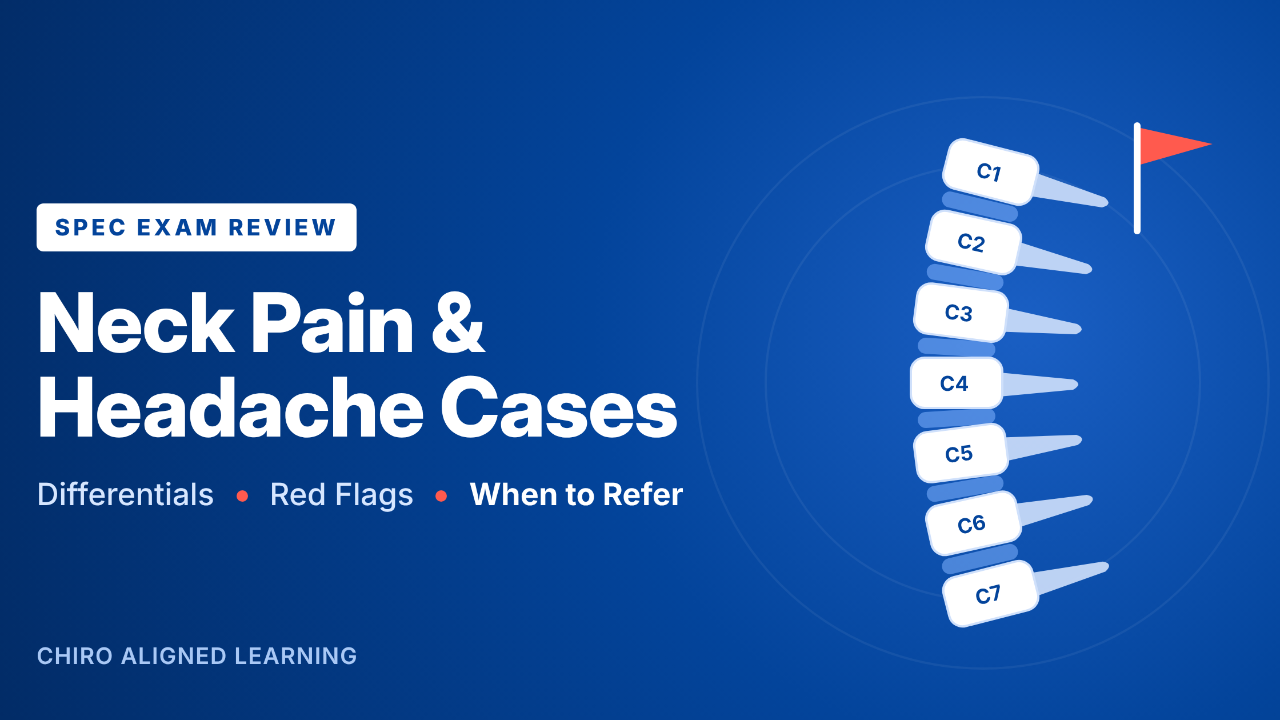
You've adjusted thousands of necks. You've seen more tension headaches and stiff, sore desk workers than you could count. So why does a SPEC neck pain or headache case make you hesitate?
Because on the exam, the neck is where the stakes are highest. A case can look like a routine cervical strain fo...

You have spent years learning orthopedic tests. You can probably perform most of them in your sleep. So why does a Part II question about "a positive Yeoman's test" or "pain relieved by cervical distraction" suddenly make your brain go blank?
Because the board isn't asking whether you can do the te...
Most chiropractic students don’t procrastinate because they don’t care.
They procrastinate while feeling:
-
Guilty
-
Anxious
-
Overwhelmed
-
Behind
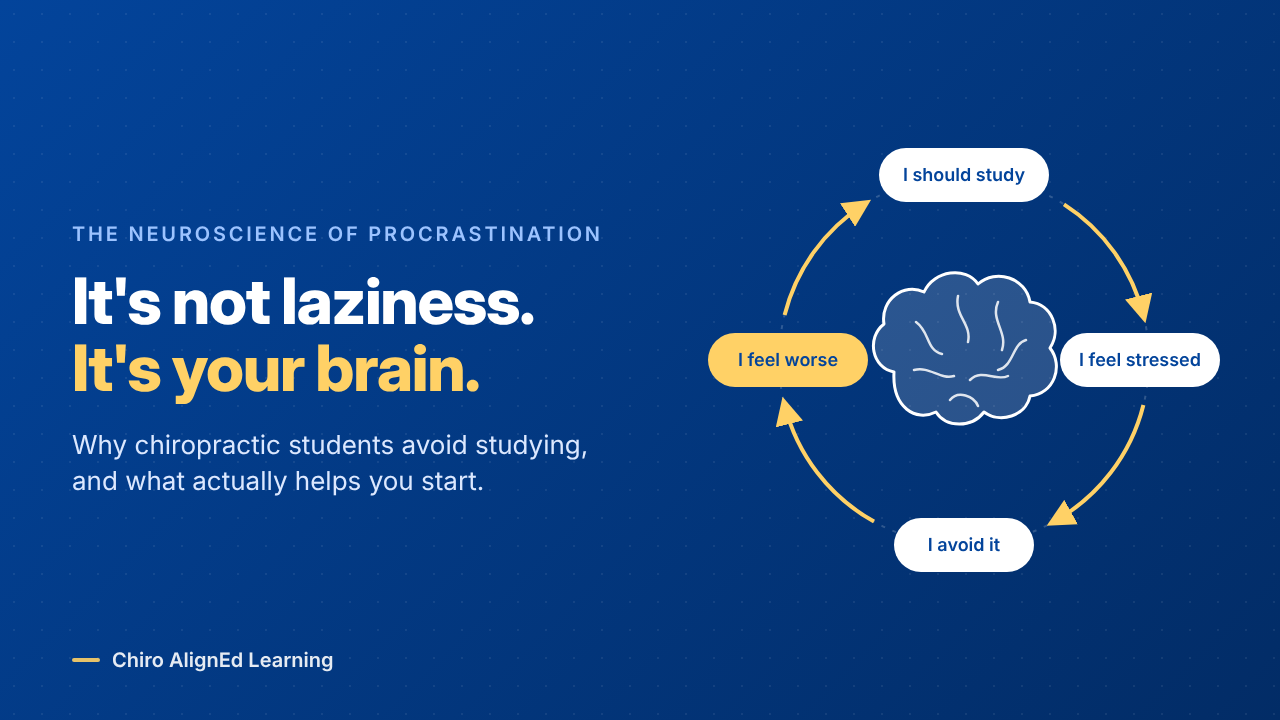
Which creates a frustrating cycle: I should study → I feel stressed → I avoid → I feel worse.
This isn’t a character flaw.
It’s a ne...
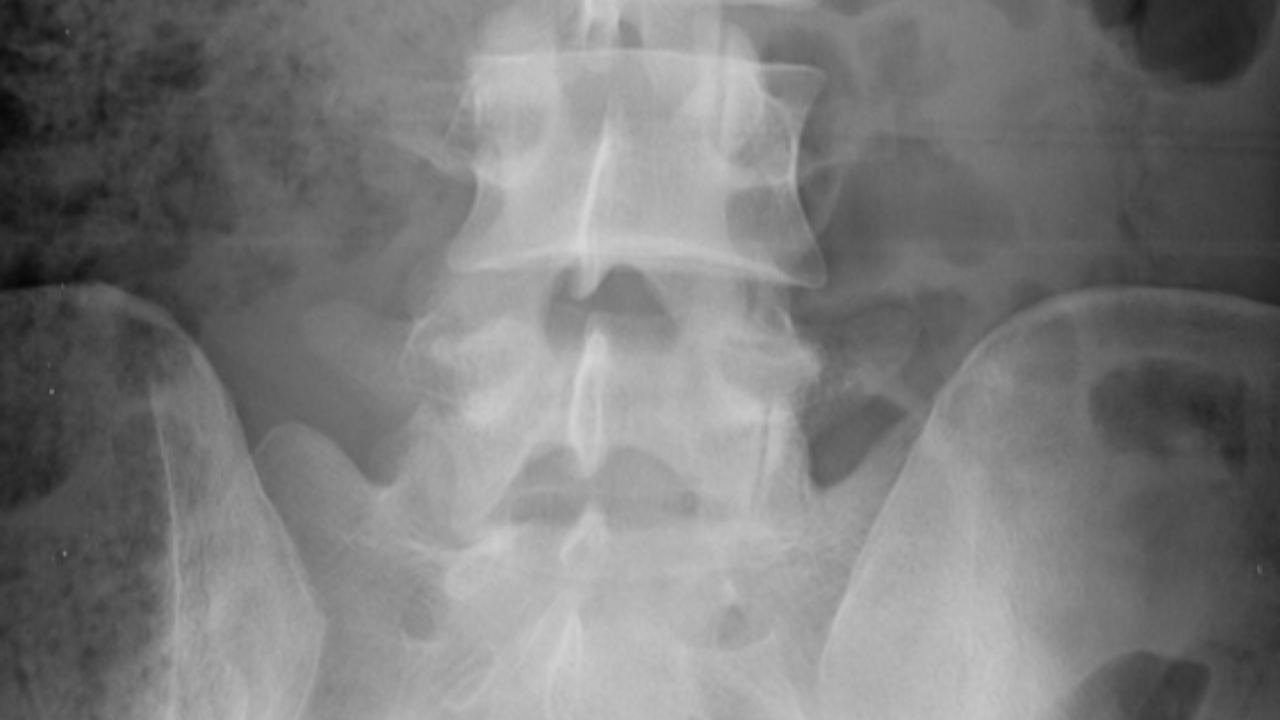
You have treated more low back pain than almost anything else. Thousands of visits, probably. So why does a SPEC low back pain case still feel risky?
Because the exam isn't asking whether you can help a patient with back pain. It's asking whether you can sort a stack of history and exam findings in...

You know how to take a history. You've done it in clinic dozens of times. So why do Part III case history questions feel so slippery?
Because on the exam, nobody is sitting in front of you. You get a few lines of text, four or five answer choices that all sound reasonable, and a clock that keeps mo...

Many chiropractic students believe effective studying requires long, uninterrupted hours.
If you don’t have a full afternoon free, it can feel pointless to even start.
But cognitive science says the opposite.
Short, focused study sessions are not a compromise — they’re often superior.
When done ...
You finally have a handle on Parts I through III, and then someone mentions the Physiotherapy exam. Suddenly you have new questions. Do you even need it? When can you take it? And how are you supposed to study for one more board exam while you're already juggling clinic, classes and life?
Here's th...

You've put in the weeks of studying. The last thing you want is for something avoidable, like an expired ID or a late arrival, to cost you the exam.
The NBCE's test-day rules are strict: show up late and you won't be admitted, and your exam fee is forfeited. Bring an expired ID and the same thing h...
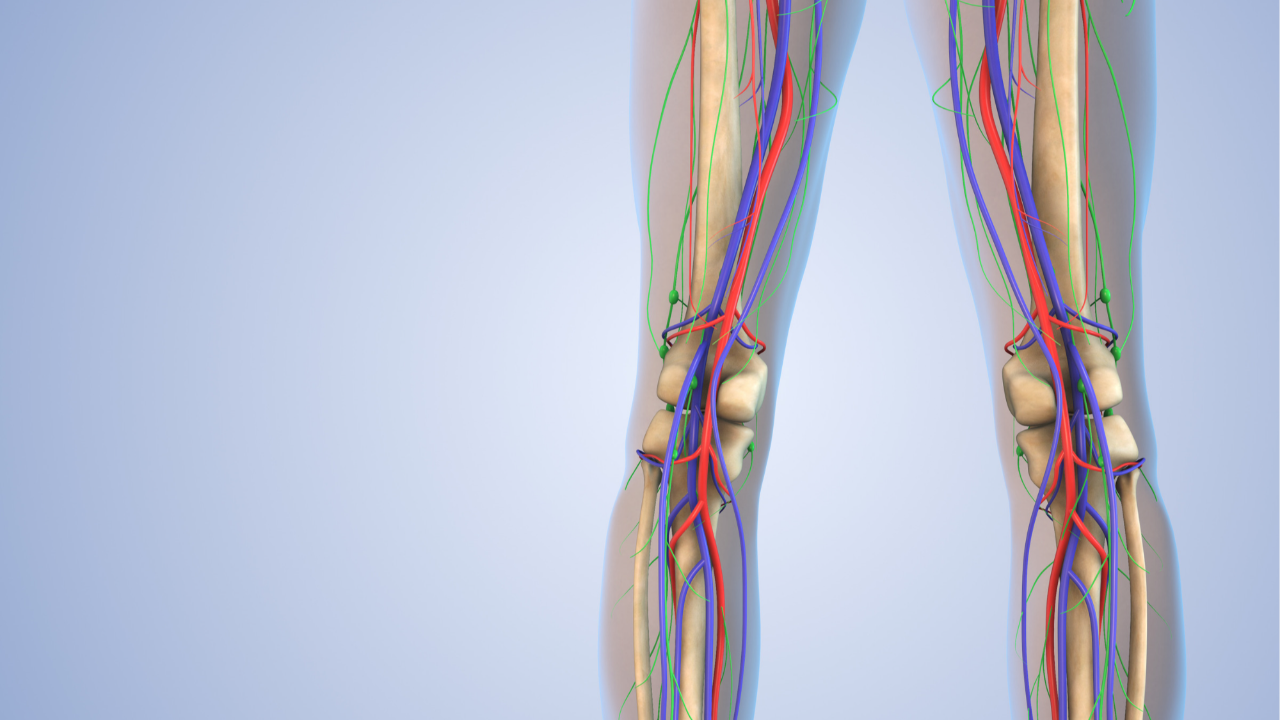
If you're going to be a chiropractor, you'll spend a lot of your career looking at low backs, hips and legs. So it's no surprise that lower limb nerves show up on boards.
The good news: the lower limb follows the same logic as the brachial plexus. You don't need to memorize every branch. You need a...

Physiology closes out Session 1 on Part I, right after General and Spinal Anatomy. It's also the domain where students most often say, "I understood it in class, but I couldn't answer the question."
That's because physiology questions rarely ask for a definition. They give you a change, like a drop...

Pathology can feel like the biggest subject on Part I. Every organ system, every disease, every buzzword. It sits in Session 2 between Chemistry and Microbiology, and plenty of students treat it as a giant list to memorize.
There's a better way in. Most pathology questions, even organ-specific ones...

You made it through Part I. Maybe you're celebrating a pass, or maybe you're just glad it's over. Either way, Part II is next, and it's easy to assume it'll work the same way.
On paper, it looks almost identical: same number of questions, same timing, same passing score. But Part II asks a differen...
